Select Language

Your first visit

Every visit starts with understanding — a thorough exam and clear conversation before any treatment begins.
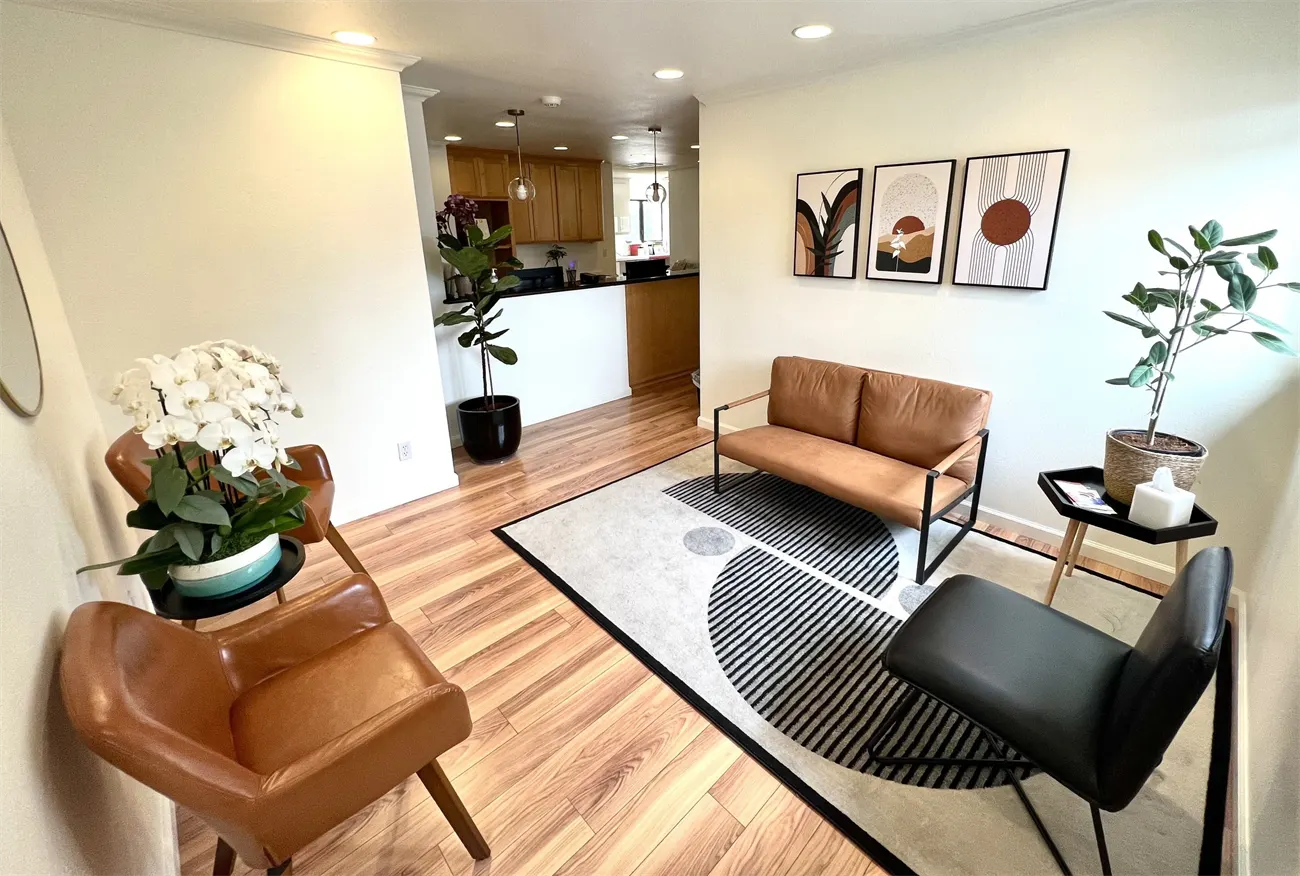
Our waiting area at Watsonville Endodontics
1

Consultation & exam

Quick paperwork on our office iPad, then any needed X-rays and a thorough clinical exam.

Our Morita CBCT 3D imaging machine
2

Imaging

Digital X-rays and CBCT 3D imaging when needed, to reveal hidden canals or fractures.

Dr. Cross reviewing findings in a treatment room
3

Findings & options

Dr. Cross walks you through what he sees and lays out your treatment options plainly.

X-ray of an infected tooth before treatment and healed after root canal treatment
4

Treatment

When appropriate, our staff may even be able to schedule your treatment for the same day as your exam — saving you a visit.

Comfort, from numbing to the last minute

Root canal treatment has a reputation it no longer deserves. With modern anesthesia and our comfort options, most patients are surprised by how manageable the visit feels.

💉

Local anesthesia

The treatment area is fully numbed before we begin. Most patients feel pressure at most — not pain.

💭

Nitrous oxide sedation

For anxious or needle-nervous patients, light nitrous sedation keeps you relaxed while staying fully in control and aware.

💊

Anti-anxiety medication

Prefer not to use nitrous oxide? An oral anti-anxiety medication such as triazolam (Halcion) can be prescribed to take before your appointment for a calm, relaxed visit.

👓

3D video glasses

Put on a pair of 3D video glasses and watch a movie during your procedure — it's a genuinely welcome distraction that makes the appointment feel like it flies by.

What it feels like

Expect gentle pressure and vibration, occasional water rinsing, and a quiet, focused room. Most procedures take about 60 minutes.

After your visit

Most patients return to normal activities the same day. Here's what to expect as you heal.

📋

Aftercare instructions

Avoid chewing on the treated side until the anesthesia wears off and a permanent filling or crown has been placed — soft foods are usually fine in the meantime if the tooth has a temporary. Take any prescribed medication as directed.

📅

Recovery timeline

Mild soreness for 2–3 days is normal — if needed, ibuprofen or Tylenol can help with any discomfort. Most patients are fully comfortable within a week and back to daily routines right away.

📞

When to call us

It's normal for a temporary filling to wear down slightly between visits — that's OK. For infected teeth, a second visit is sometimes needed to fully resolve the infection. Call right away if you have severe pain, swelling, or a reaction to medication; we always keep time open for our patients.

ℹ️

Follow-up care varies by tooth

You may need to follow up with your general dentist after your root canal. Some teeth need a crown; for others, your dentist may simply place a permanent filling. In some cases, Dr. Cross seals the tooth completely and no further treatment is needed. If you're ever unsure what your tooth needs, don't hesitate to call our front desk — we're happy to help.

📧

We'll keep your dentist informed

After your visit, we send your general dentist a letter summarizing the treatment and outlining any restorative work — like a crown or filling — that may still be needed.

📅

A one-year recall to confirm healing

We may schedule a follow-up visit around one year later to take a new X-ray and confirm that the infection has fully healed.

Frequently asked questions

Understanding Root Canal Treatment

An endodontist is a dentist who has completed an additional two to three years of specialized training beyond dental school, focused entirely on saving teeth, primarily through root canal treatment and related procedures. Endodontists diagnose and treat tooth pain, perform root canals on both routine and highly complex cases, and use advanced tools like 3D imaging and surgical microscopes that aren't typically part of a general dental practice. Dr. Cross has completed this additional training and focuses exclusively on this area of dentistry.

Many general dentists do perform root canals, and for straightforward cases, that's often perfectly appropriate. But some cases are more complex: severe or persistent infections, unusually curved or narrow canals, teeth with extra or hidden canals, retreatment of a root canal that failed previously, or cracked teeth that are difficult to diagnose and treat. These situations often call for more advanced tools, imaging, and hands-on experience than a general practice is set up for. Because of this, general dentists frequently refer these cases to a specialist like Dr. Cross, so you get the outcome that gives your tooth the best chance of long-term success.

Inside every tooth is a soft tissue called pulp, containing nerves and blood vessels. When that tissue becomes infected or inflamed, root canal treatment removes it, cleans and disinfects the space inside the tooth, and seals it. This relieves pain and lets you keep your natural tooth instead of losing it to extraction.

Modern root canal treatment is done under local anesthesia and is comparable to getting a filling. Most patients are surprised at how comfortable the appointment is. In fact, the infection causing your symptoms is usually far more painful than the treatment itself. Any soreness afterward is typically mild and manageable with over-the-counter pain relievers.

Bacteria can reach the inside of a tooth through several paths:

  • Cavities that were left untreated and worked their way deep into the tooth
  • Cracks or fractures, sometimes from grinding, trauma, or biting something hard
  • Old fillings or crowns that have worn, leaked, or developed a gap underneath, letting bacteria seep in undetected
  • Repeated dental work on the same tooth over the years, which can eventually stress the pulp
  • Occasionally, just bad luck — some teeth are more vulnerable to internal cracks or have anatomy that makes them prone to problems even with good home care

Common signs include lingering pain to hot or cold, pain when chewing or with pressure, a persistent dull ache, swelling or a bump near the tooth, or a tooth that has darkened. That said, some infected teeth cause no symptoms at all and are only found on X-ray, which is one reason regular dental checkups matter.

Your own tooth is almost always worth saving. Root canal treatment has a high long-term success rate, and no replacement, whether an implant or bridge, functions or feels quite like your natural tooth. We're happy to discuss both options honestly so you can decide what's right for you.

Our Technology and Approach

The Endocator is a chairside device co-developed by Dr. Cross that measures ATP, a molecule found in living cells, to detect residual bacteria left inside a tooth after cleaning. It gives us a numeric result, the Endoscore, right at the chair. Traditionally, endodontists have had no reliable way to confirm a canal is actually disinfected before sealing it; they simply trust that their process worked. The Endocator lets us verify it, so we know the tooth is clean before we close it up, not just hope it is.

Root canal systems are complex, with tiny side channels and irregular shapes that instruments alone can't fully reach. We use the EdgeEndo laser to activate disinfecting solution inside the canal, driving it deeper into these areas and improving bacterial kill compared to rinsing alone. Combined with the Endocator, it's part of how we push for a higher standard of disinfection than a conventional root canal.

We use a Morita Veraview X800 3D CBCT scanner to see the tooth's anatomy in three dimensions before we ever start, an EdgeEndo laser and Odneclean irrigation activation system for disinfection, and a surgical microscope for every procedure so Dr. Cross can work with magnification and precision that the naked eye can't match.

Dr. Cross works better with more information, and a CBCT gives him a full 3D picture of your tooth before treatment even begins. It confirms which tooth is actually the source of the problem, shows the size and extent of any infection and whether a second visit may be needed, reveals how many canals the tooth has and their exact shape and path, and identifies the location of important nearby anatomy, like nerves and sinuses, that need to be avoided. Because this information directly shapes how treatment is planned and performed, a CBCT is often a required part of your care.

The Treatment Process and Recovery

If you'd like to listen to music or a podcast during your procedure, feel free to bring your headphones or earbuds. While it's not expected, we'd also gently suggest avoiding fancy clothes — on rare occasions, some of the disinfectants we use can stain fabric.

Most root canals are completed in a single visit. However, when an infection is severe, we'll sometimes place a medicated antibiotic dressing inside the tooth and seal it temporarily, giving that medication time to work directly at the source of infection before we complete and permanently fill the canal at a second visit. This isn't a step we take routinely; it's reserved for cases where it gives the tooth the best chance at healing well.

We recommend avoiding chewing on the treated tooth until it has a permanent filling or crown in place, since the tooth is temporarily weaker and more prone to fracture. You can eat on the other side of your mouth once the numbness from the local anesthesia wears off, usually within a few hours. Once your restoration is complete, most patients can chew normally on the treated tooth again.

Often, yes, especially on back teeth (molars and premolars) that handle heavy chewing forces. A root canal removes the internal structure that once supported the tooth, which can leave it more brittle and prone to cracking under normal biting pressure. A crown protects the tooth long-term. We'll let you know at your visit whether your specific tooth needs one.

In most cases, yes, your existing crown can be saved. We access the inside of the tooth by making a small hole through the top of the crown, complete the root canal treatment, and then patch that opening, so your crown stays in place and doesn't need to be replaced. However, if the crown is leaking, has severe decay underneath it, or is otherwise failing, it may need to be removed and eventually replaced. We'll always check this and let you know what to expect before we begin.

Most root canals are scheduled in 60 minute slots. The actual time in the chair can run a bit shorter or longer than that depending on the specific tooth and the complexity of its canal anatomy. We'll give you a time estimate specific to your case when we see you.

A consult lets us confirm the correct tooth before treatment begins, which matters since tooth pain doesn't always point clearly to its source. For retreatment cases, meaning a tooth that's had a root canal before and is having problems again, a consult is almost essential. It lets us evaluate the tooth and determine whether retreatment, extraction, an apico, or no treatment at all is the best path forward, before committing to a plan.

Mild soreness for a few days is normal and manageable with over-the-counter pain relief. Unless we instruct you otherwise, brush and floss the treated area as you normally would. Avoid chewing on the treated tooth until your restoration is complete, and follow up with your regular dentist for your permanent filling or crown as recommended. Contact our office if you notice increasing pain, swelling, or a bad taste, though this is uncommon.

Surgical and Advanced Procedures

An apicoectomy, often just called an "apico," is a minor surgical procedure used when a root canal alone hasn't fully resolved an infection, or when retreating the canal from inside the tooth isn't a good option. Dr. Cross accesses the very tip of the root through a small opening in the gum, removes the infected tissue along with a few millimeters of the root tip, and seals it from that end. It's done under local anesthesia, typically takes under an hour, and allows you to keep the tooth rather than lose it to extraction.

A root amputation, sometimes called root resection, is a procedure reserved for molars, which have multiple roots. If one root of the tooth is fractured, severely infected, or otherwise beyond saving while the rest of the tooth is healthy, we can remove just that one root and preserve the remaining structure and roots. This lets you keep the majority of the natural tooth functioning instead of extracting the entire tooth.

About Our Practice

Dr. Cross's roots in Watsonville run deep. Long before opening his own practice, he spent years treating patients in this community, including his work with Salud Para La Gente and with Clinica de Salud del Valle de Salinas at its Pajaro location. That experience gave him a firsthand understanding of the community's needs and cemented his commitment to the area. When it came time to open his own practice, Watsonville wasn't a choice, it was a return to a community he already knew and cared about.

Yes. We work closely with referring dentists throughout the area and send detailed updates after every visit so your dentist stays informed and can coordinate any restorative work, like a crown, that follows your root canal.

We're located at 390 S. Green Valley Rd, Suite 7, on the second floor. We recommend using Google Maps for turn-by-turn directions, and if you have any trouble finding us or have questions about parking or access, please don't hesitate to call our staff — we're happy to help.

Ready to feel better?

Send our staff a message and get answers, options, and relief.